Finally after facing lot of personal problems, Joshua Sridhar is back to business. He entered Tamil film music with a bang in “Kaadhal” and nearly after 1.5 years’ returns with “Uyir” now. After being fed with too much of sweet and variety of good music from Yuvan, “Uyir” comes as a change. Why I like Joshua’s music?
Though his music draws lot of inspiration from A.R.Rahman, I have got no complaints, he sure knows what he does and that shows in his music. Infact, I like his music very much because it carries vintage early 90’s Rahman sound. The inspiration is so high that Joshua sounds like Rahman even while singing. The ease with which he mixes Tabla and Thavil beats with ethnic percussions and drums is damn Rahmanish. And of course everything that I am going to say about Joshua’s music here will perfectly fit to Rahman’s music too.
Joshua’s music got a perfect mix of fast rhythms and melody as you can listen in all the songs in this album. Even the peppy fast number like ‘Convent’ has a beautiful melody in the vocal tune. A neat performance by Tippu is dominated by loud synth sounds. I think a lot of experimentation has gone in the sound-mixing table but they could have raised the volume of the voice layer a little bit more. Otherwise it is a very good number to start with.
The build up of the song in the prelude before the main tune or the actual song takes off is damn good. I don’t think any of the folk numbers in recent past had such beautiful layers in the prelude like that in the “Uthadum Uthadum” song. It has an extremely catchy rhythm that is sure to rock Tamilnadu in near future. The usage of strings in “Kan Thirakkum Neramae” gives a soothing start to the otherwise fast number. The lazy plucking of some string instrument (is it some kind of Guitar) for the sensuous number “Aanum Pennum” gives a psychedelic start to the song. And we get to hear this sound all through the track till the end that keeps us intact with the mood of the song.
You won’t listen same rhythm pattern or same combination of layers repeated in any of the song. You never know what twist and turn a song is going to take. Especially the “Kannae Kadhal” song is brilliant with lot of surprises in its orchestration, mood and rhythm. This song is my pick of the album. Next comes “Kan Thirakkum Nearmamae” song when considering the surprise level in its blend of various forms of music and instruments.
There are too much of E-beats, synthesizer and ethnic instruments put to use in too many layers in all the songs and yet there is completeness in the orchestration. You don’t find any single annoying mix of sound in the songs. This is one task that cannot be accomplished so easily. A synthphony may turn into a cacophony if not properly done. Joshua sure has got his basics right when it comes to fusion and orchestration with real instruments. One of the most beautiful pieces is the second interlude of “Kan Thirakkum Neramae” song where Shehnai plays a fast melody and as a counterpoint Strings play a completely different melody in parallel in same tempo.
Joshua somehow manages to pull in classical elements in all the songs. The Mahathi’s alaaps are blended well with the songs. Also all the songs have a semi classical touch in its melody and that adds a class to the songs, which would otherwise have become very ordinary fast numbers.
Choice of singers is another department where Joshua scores. I was thinking about Sainthavi ever since I heard “Un Kangal Ennai Sera” song from Thambi. She has got a beautiful voice. She sings two songs in this soundtrack and both are extremely different ones. She does full justice to both the numbers. Joshua’s favourite Haricharan (who sung “Unakkena Iruppaen” in Kaadhal) gets to sing a much faster number this time. Pradeep who sings “Kannae Kadhal” is another
Good find. Shalini does a fine job in “Aanum Pennum” song. Her voice is getting more mature in every song.
I forgot mention about one song that is the “Uyir” theme. Like “Kadhal” theme, the vocals singing the “Thana nana” version of the tune reveal this theme. A pretty simple, short and sweet track.
There are lots and lots of other minute things that I love in this album. Anyway, I should say we have got another promising music director to Tamil film music. Don’t complain Joshua for being Rahmanish, no contemporary composer can get away from the influence of A.R.Rahman. On the whole, “Uyir” is a completely satisfying album and it is definitely worth the wait.
4.25.2006
Notes on Uyir Music
4.17.2006
Fanaa Music is Good
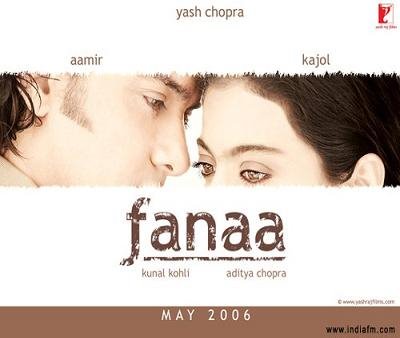
“Fanaa” music has got a right mix of clichéd sounds and refreshing layers of music. Jatin – Lalit borrow styles of various composers to give a unique sound to the album. That is why I would say that it is a cock Style of music with Jatin -Lalit retaining their own identity in all the songs and yet trying to sound different by adopting the best of their professional rivals. But fortunately they have restricted their compositions in giving sounds like feel and not sounds alike feel. The thing I like about these composers is that they have not tried to sound completely different as Anu Malik did with “Asoka”. Still I suspect the originality of the songs in that movie. It was too good to believe as Anu Malik’s own compositions. Coming to this album, I don’t know how much Salim – Sulaiman’s minds are involved in giving this fresh sound to the songs as they are credited as programmers for all the songs. That stops me from giving the whole credit for this album to the Jatin – Lalit duo.
I was not a serious follower of Hindi film music before 2000 yet I managed to listen at least the most popular ones. We south Indians can easily identify a Hindi song even before the singers start to sing the song in Hindi. In Indian music, we have this technique of starting the song with a short prelude before the actual song begins. The music in this part will almost have the signature sound of Hindi film music then and it is more than enough for us to find that it is a Hindi song.
The songs will start with either or combinations of following elements
1) A Male (Udit mostly) / A Female Singer (Lataji mostly) will hum something followed by “La la la laA” version of the tune as you can listen in “Chand Sifarish” song in this album.
2) The whistling of the main melody as you can listen in “Chanda Chamke” song in this album.
3) A Santoor or sitar or Veena playing the main melody as in “Mere Haath Mein” song in this album
4) A male/female chorus with 100 violins in the background as in “Desh Rangila” song in this album
5) A Shehnai with dholaks and north Indian percussions for festive songs as in “Desh Rangila” song in this album
6) The most popular one being the Guitar playing the main melody as in “Chanda Chamke” song in this album
7) And most latest one being a banging clubby techno beat with robotized voice singing the most beautiful song of the album as in “Chand Sifarish” club mix in this album
Let me know if there is anything more to add to the list?
As you can see sorry listen, the songs have got all the necessary clichéd or conventional or familiar or most successful formula of music that will please the normal listeners and yet its doesn’t bore you and here follows the reason
Just a Guitar joining in rhythmically with usual Tabla beats gives a whole new flavor to Chand Shifarish song. If that is not enough we have Kailash Kher giving additional freshness with Subhan Allah chants. And add a heavy bass line in the background you get a vintage Rahman sound in the song. But the song soon shifts to Adnan’s style of composition. Just hear the Tabla rhythm, it is the same as in “Pal to pal” song from Adnan’s “Teri Kasam” and also the restricted usage of slow Strings in the background for the whole song, is like how we hear in most of Adnan’s songs. Nonetheless the tune is catchy to the core. Shaan is good enough in rendering the song with necessary energy and enthusiasm.
Mere Haath Mein has got a beautiful melody that makes us not worry much about the orchestration. Though the song starts with conventional beats, soon the layer of E-beats adds makes it more appealing. The Santoor bit playing the main theme evokes a sad mood out of the melody. Sonu Nigam and Sunidhi Chauhan do a fine job with their expressive vocals. But the best of them is yet to come.
Desh Rangila” is devoid of any new elements and yet I liked the song. It may be because I love Mahalaxmi Iyer’s voice. At least for next few days while listening to the album, I won’t skip this song. Haven’t heard “Yaara” from “Hum Tum”, but I liked this tongue twister Chand Chamke song. It is fun to listen to this number with a catchy tune.
Dekho Na is easily the pick of the album. Everything is just perfect in this song. The main melody is so soothing that it takes you into a romantic world. Though it may sound Rahmanish initially, it sounded SELish (Shankar Ehsaan Loy) music to me. Before listening to this song, listen to “Aao Naa” song from “Kyun Ho Gaya Na” and you will also feel the same. The beats, the usage of Veena and the orchestration in the interludes are quite similar. Sonu and Sunidhi are at their best in this number, listen to the way Sonu modulates “Samjo naa”, I go “Fanaa” whenever I listen to this song. Also this song has some sounds like feel to “Hum Tum” title track composed by Jatin – Lalit.
Destroyed In Love Lounge mix is an instrumental version not just one but of the two beautiful melodies “Mere Haat Mein” and “Dekho Na”. Haven’t really heard much of Lounge music, if this is its actual form, then I must try out some Lounge music. Dhrubajyoti Phukan does a brilliant job in orchestrating or programming the beautiful melodies with right instruments in this number, so that the beauty of the actual melodies is further enhanced. Basically he has got the rhythm right that gels well with both the melodies. It is a perfect music for opening and end credits of the movie.
Fanna for You is the remixed version of “Chand Shifarish” number. Usually, remixes are not my cup of tea. The basic parameters with which I judge a remix song is that how much value does it add to the actual song. Songs like that are seldom made. This song will work as the main intention of doing such remixes is to reach the youth by increasing the tempo with Techno beats to suit the dance floors of clubs and pubs, where there is no time or mind to follow any melody.
“Dekha Na” Sunao, Gao aur Fanaa Ho Jao…..
4.11.2006
Udayananu Tharam
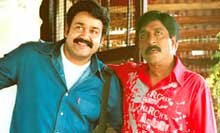
The big irony in “Udayananu Tharam” is that the writer who has decided to mock, bash and criticize the heroes (for all sorts of irresponsibility they show while a movie is in the making and the level of torture they give to the directors on the sets) through this movie takes the hat of the hero and the actor whom he is actually mocking takes the hat of the writer.
Mohanlal (Udayan) is an aspiring director. In his struggling days, he puts all his mind and energy and comes up with one of the most brilliant script and a screenplay. Srinivasan is Mohanlal’s roommate. He aspires to become a hero (not an actor). He steals and takes this ambitious screenplay of Mohanlal to a producer claiming it as his own screenplay. He himself acts as hero in the movie and becomes an overnight star. Though aware of this betrayal, Mohanlal is compelled to direct his first movie with Srinivasan as the hero. To hurt Mohanlal, Srinivasan walks out of the project when the film is almost complete. Only few more scenes are to be shot to complete the film. How Mohanlal makes Srinivasan to act for those few remaining scenes is what that leads to a brilliant climax.
The movie works mainly because of its screenplay. While it shows how irresponsible the actors are and how little role they play in the success of a film, he makes us realize that the writer/director is the real star of the movie by showing the amount of tantrums and tortures they face in this star driven industry before facing success. Those scenes which reveals about the stars serves as comedy line of the movie while those of the director’s tantrums are serious and emotional. This sinusoidal wave of two extreme emotions has been balanced well in the screenplay so that it neither becomes just a comedy nor it becomes a serious raw movie on reality of the film industry. But yet the episode of Meena and Mohanlal puts a speed breaker to the otherwise smoothly flowing screenplay. At least this can be excused as it serves to portray the personal problems of the aspiring directors, which acts as an obstacle for the aspiring directors to succeed in the career. But it makes the otherwise natural character of Srinivasan a little cinematically villainous when he says that he takes revenge on Mohanlal as he married Meena – his dream girl. When there is a realistic take on the heroes, it seems they forgot about the heroines or is it that the actresses are really this good in Malayalam film industry. In this movie, Meena plays the role of an actress who acts only in movies which has a good script. She says that she has come to cinema to act and have a creative satisfaction and not just to earn money. An irony again.
Though all the actors have done their part well, Srinivasan steals the show both as the writer and actor. Mohanlal has done a neat job in going through all the emotions of a struggling and aspiring director would go through. I wonder how Mohanlal accepted to do this movie as he himself got mocked in one of the scenes. It can happen only in Malayalam film industry. Meena is just okay. Most of the songs are crisp and before we feel bored, it ends. But the song sequences with Srinivasan and Meena are hilarious.
This movie is like how if one of Satyaraj’s spoof movies in Tamil were done with an artistic excellence. Udayananu Tharam proves that Srinivasan i.e., a writer/director is the real star.
4.04.2006
Double Concerto - L.Subramaniam
Here is a man who has done a western classical piece and also has performed it without any media blowing big trumpets from behind. Dr.L.Subramaniam (came to know about him when he was replaced by Illayaraja as composer for the movie “Heyram”) the famous Indian violin player has composed a Double concerto for flute (performed by Michael Martin Koefler) and Indian violin (performed by Dr.L.Subramaniam) and it was performed along with Brandenburg Symphony Orchestra. Though this is not a full-fledged western classical composition that could be played anywhere around the world, it is almost. It has got both Indian and western classical music without either of the forms disturbing the other. This being Subramaniam’s first orchestral work, he has done a remarkable job in writing this piece.
Strict to the form of Western classical concerto, it has fast-slow-fast three-movement structure. The first movement starts with a bang engaging the whole orchestra. Within few minutes, the composer lets us to understand how this journey is going to be by shifting alternatively to western orchestra and Indian ensemble in the fast prelude. After the prelude, the beautiful main theme is played in oboe. It is a theme that you can never classify as a western classical or Indian classical piece. It is just a beautiful melody. It is just music. When you hear it on oboe or clarinet it sounds western and when you hear it on Indian violin it sounds Indian. There are many more sub themes in this movement. A separate theme is written for the whole orchestra to break out with intermittently. Thus, the main theme development doesn’t happen in the western classical way here except at the end of this movement. Instead, the orchestra just develops the theme meant for it. The main theme development by lead Violin and flute is strictly in the Indian classical way. Flute takes the lead playing the main theme and stretches the theme further searching for all possible variations. I liked the conversation part between Indian Violin and Flute where Flute follows the Indian violin extending the range of the main theme. But when for the second time, the Indian Violin comes into picture; the whole orchestra takes a break. Indian violin and flute along with Mirudangam offers a strict Indian classical concert (katcheri) lengthy enough to forget that you were listening to a concerto. The only thing I didn’t like in this movement is the use of drum roll like we use to hear in the rock and roll music. Also, the Xylophone that immediately precedes this drum roll bit in the orchestra could have been used more subtly. Its volume level adds an immature sound to the composition. At least that is what my ears felt, though I am not elite in either form of music.
Second movement starts with a new theme. It is a very intimate theme that evokes a somber feel. For 12 minutes we hear nothing but this theme in its all-possible forms played by solo flute, violin, cello and strings. The tempo of this movement is too slow compared to the other two movements. Yet, the beauty of the theme and its development on various solos keeps us awake.
Third movement has got a new vivacious theme. This theme will better work as a rhythm than a melody. Though not bad, it sounds odd when this theme is played in Indian violin or the flute. But with the huge orchestra, this kind of theme provides ample scope for development. Finally, after having done enough romance with hardly touching each other in first two movements, the marriage of western classical instruments and the Indian classical ensemble happens in this movement. Even from the starting one can hear a voice singing the theme as a jathi in the background. It does sound unique and interesting to listen to a symphony orchestra along with Mirudangam, Morsing and other Indian instruments playing together.
Always an exciting moment waits in the last movement of such concertos where the main theme played in the first movement will reappear surprisingly at some point. At this moment we will get a relaxed, home coming feel. Actually in this movement, the theme of the second movement appears first without much effect. But as the movement progress towards the end, the full throttled orchestra suddenly comes to a pause and the clarinet starts to play the main theme. A truly exhilarating moment it is. I was expecting that the third movement will end much in the same way as the first movement with the whole orchestra playing the main theme of this movement in unison, but it ends with the instruments playing chords together, in a more conventional way.
“Double Concerto” is for sure a double treat for those who enjoy both Indian and western classical music. Though not sure how much a purist will like it.
4.01.2006
Ada Raam - aaH?
 The media is going gaga over "Raam" for being screened and nominated for "GOLDEN APHRODITE" award in Cyprus International Film Festvial. I think the movie is plain mediocre. It just had an unique screenplay format. But that's about it.
The scenes in the flashback which are meant to unfold the eccentricities of Raam lacks depth and logic. It doesn’t provide enough reasons for why he behaves the way he does. This lack of a fineness in raam’s characterisation makes his actions and reactions irritating. Why the hell he has to chant those mantras on the top of hills? Is he mentally retarded or is he a spiritual person who has a different perception about the whole world? Or what made or changed him like that? There are actually no answers for all these questions in the screenplay. It is this week characterisation that makes Jeeva's performance forgettable, no matter how hard he tries to make it appealing.
We are disappointed when we come to know the real murdered instead of getting surprised and that is the biggest drawback of the movie. Also in a thriller, there must be enough suspects and only if they are, we will be surprised when we come to know that they are not and some other is the real culprit. So, as there are no many suspects the ending was not a great shock. Even the revenge episode at the end is not handled well and it turns a comedy by the inclusion of a song with visuals showing Raam chanting mantras on the top of the hill. It lacks depth, force and logic which “Adada” song had in “Pithamagan”.
But I am happy for Yuvan Shankar Raja, who won the award for Best Original Music score. He did a great job in scoring background music for the movie.
3.23.2006

3.09.2006
Vettaiyadu Vilayadu Music Review
“Karka Karka” is a very catchy rap number. The form of music chosen is quite different to sing praise about the honesty and courage of Raghavan (the character of a police) in this song. Initially I didn’t liked the rap bit that comes in the trailer which is a part of this song but know I like it. Thamarai’s lines are impressive. “Partha Muthal” has a serious “Suttum Vizhi” hang over in all section of the song, be it the melody, the rhythm, tune or the vocals (Bombay Jayshree), it is a sequel to the hit number. The only difference is the impressive mouth organ piece in the prelude. It is nice to hear Unnimenon after a long time in this song. “Manjal Veyil” has the stamp of Harris Jeyaraj. It is good peppy track. The rhythm and bass sound similar to “Endrendrum Punnagai” and “Ennai konjam” song. I like the Sax piece in the interlude as much as I like that of in “Suttum Vizhi” song. On the whole, the song sound average now but I could sense the scope for growing on repeated listening.
“Uyirilae” is a beautiful melody with a simple heartbeat like rhythm in the background all through the song. This heartbeat rhythm is like an underscore for the conversation between two hearts for which Mahalaxmi and Srinivas give soothing and expressive vocals in the fore. Interludes are done with great care. Orchestration is beautiful and takes the feel in the song to higher level. “Neruppae” has an infectious rhythm and that makes this song an instantly likeable one. I am sure this song will be a chartbuster. Arabian chants and strings add a new flavour to the song but I am not sure about its originality. On the whole, I think it is almost a hatrick for Gautam – Harris Jeyaraj combination.
Also if you care and carve for good and genuine music do listen to "Thee" and "Mudhal Mazhayae" albums.
Muthal Mazhayae Music Review
Devan Ekambaram came to Chennai to become a composer and did a pop album along with S.P.B. Charan. I remember seeing the promos of the album in Vijay TV then. I think it was some 10 years back. Then he became a singer and sang many hit numbers and even acted in a film and gave his voice for the hero of the movie “Little John”. But after doing all this, Devan returns as a composer with an album called Muthal Mazhayae. Harish Ragavendra is the other singer and he has also written the lyrics for all the songs.
It is a kind of album that we carve to listen. It is an all-melody album. There are totally 9 songs and all are beautiful refreshing melodies. Though they are melodies, Devan seems to be influenced by western music a lot. It is quite interesting to listen the way the words take different diction and expressions with western notes. As a counter point Harish Ragavendra’s vocals has a strong Indian classical influence. Such two extreme influences are beautifully harmonized in the songs to give us a unique listening experience. Both Devan and Harish have soothing vocals and their expressive rendition enhances the melody in the songs. I am surprised composers don’t give melodies to Devan. He is too good in all the melodies in this album. The format of some the songs are not the usual ones that we get to hear in film music. There are enough surprises in all the songs. We can’t predict what instrument will follow what or what form of music will fill the next interlude or how different a turn the note and style of the next line/word in the song may take. It is this surprise element that makes it a unique listening experience. One more thing that I like about the album is the way Devan has used the Bass guitar in the songs.
The most stunning number in the album is the title track, which is done in the form of a Cappella. It is one of the most beautiful melodies I have heard in recent past. Cappella is a form of music that has no backing orchestra. It is a musical piece written for voices. A main lead will sing the song and a choir backing will support the main lead. I am really impressed by the effort gone in making this song the way it is. The multi-layered choir backing is great and is perfectly in synch with the tune and mood of the main melody. There is one more version for this song with orchestral backing, which again is a great effort. One more interesting number is “Thedudhu Kangal” sung by Harish and Mahalaxmi Iyer. It is heavily inspired by the IR duets in 80’s. Initially I didn’t like this song but later liked it mainly because they have understood and adapted IR’s style really well. All other songs are equally good among which I felt “Iravugal” is a little boring song though the melody is good. The lyrics by Harish are pretty good and decent enough to carry the melody in the song. “Muthal Mazhayae” is as beautiful and fresh as first drop of rain.
3.08.2006
Thee - The Fire Within
The boys of Encore have got all the basic elements of composing right. They have come out with a rocking album with songs of different genre of music though rock (predominant usage of electric guitars) form takes a little edge over the other. With the help of musicians like Sivamani, Amalraj and few others whom they give credits as their mentors, they have done great job in using the instrumental pieces played by these musicians by putting them at right places in almost all the songs in the album. The most likeable thing about the album is the way they have beautifully built the layers one over the other in preludes and interludes of the songs. The layers in harmony and nice orchestration make us feel ecstatic when we listen to them. Also they have tried different sounds and fusion and it has worked out well.
The album starts with an electrifying rock number “Thee”. A very catchy one and the special live percussions by Sivamani take the song to greater heights. The electric guitar playing the tune of “Ayigiri Nandhini” in the interludes is a nice idea and the tune sounds great in this new form. Then comes a melody “Thai Polavae” with sweet vocals of Chinmayi. It is a beautiful melody with nice lyrics and a haunting violin piece. But I feel the melody would have got better and more recognizable if it were sung in a little higher pitch. Or may be the monotonous beats in the background were comparatively heavy and loud as the pitch of the voice is very low. “Dinam Dinam” is a peppy western number. Devan is the apt choice for this song. The guitar interludes are great especially the one which starts in western and ends with carnatic notes. “Enthan Uyire” is a yet another good melody. Prasanna’s soothing vocals and expressive singing enhances the beauty of the song. Prasanna is for sure a talent to look out for.
“Thee” theme track is six minutes of non-stop blast. It is brilliantly composed and performed musical piece. It starts with a very unusual violin piece in a low key followed by sitar, flute and electric guitar each playing a catchy tune. The main rhythm and percussions that connects all these pieces maintains the pace, rhythm and keeps up the liveliness of the track. “Pattikattu Mappillai” reminds me “Rambam bam” song. It just adds to the variety in the album. As I said, they have got the basics of this genre right. “Ulagathin” is one song that would have rocked Tamilnadu if it were used in a movie. The infectious Nadhaswaram piece with synth rhythms and Thavils beats along with Manicka Vinayagam’s rustic vocals make this track an irresistible one. In “Askku Buskku”, they have tried to stuff too many elements in a single pack. The tune is ordinary. Yet the track is listenable for the surprising twists and turns it takes from one form to another form of music. Summing up, Encore proves that they have a fire within with their debut album “Thee”.
Private (Pop) Albums in Tamil
Malgudi Subha’s “Vaalpaarai Vattaparai”, Anuradha Sriram’s “I am a modern ponnu”, Veenai Gayatri’s “Pappara”, some X’s “How are you doing buddy”, Srinivas and Karthik’s “Ussele Ussele”, Lata Rajinikanth’s “Dhithimitha” are some of the pop songs that is fresh in my mind when I think of popular Tamil pop songs. And that is really negligible number. I am talking about the pathetic condition of Tamil Pop industry (there is no industry as such but yet let us call it that way) now and then.
In Hindi, there was an era where lot of great talents came to fore due to this private album concept. Though quality of the music has gone down now, Hindi pop has its own fan following. In Hindi, there are bunch of singers who hardly sing in movies but are popular and will be ever remembered for their music and singing in private albums. I think our composers, musicians and singers should seriously think about making private albums like them. Film composers like Yuvan, Vidhyasagar, Illayaraja (has done his part with “Thiruvasakam”) and A.R.Rahman should make private albums and make the genre popular among the common people. They should make people realize film music is not the only form of music.
People should be trained to listen to music as music alone. They should not rely on the visuals, hero/heroine and dance choreography to enjoy the music. I know people listening to some of the song just because it has their favorite hero shaking his legs for the song. I just could not digest the fact that how the presence of a hero whom you like, dancing for the songs turns a bad music into a good one. Further Tamil pop will help lot of young talents to come up. Also it will help some of underutilized and underrated composers like Karthik Raja, Ramesh Vinayakam to change track and create the kind of music they want to with full freedom.
The music in movies puts lots of constraints to a composer, which leads him to produce music, which he himself doesn’t like. A composer’s talent is a waste when the director of the movie has no ear for good music. The best example in recent times is Niru. I really liked most of his songs in his debut private album “Moongil Nila” but he couldn’t deliver same quality of music for the movie “Kalabha Kadhalan”. Yes, there are composers who take those constraints as challenge and come up with triumph. But I am not talking about great composers/ geniuses here. I am talking about fresh new talents with good-enough composing capabilities those who don’t get a good chance to exhibit all his talents through his music for a movie.
Why I am talking about this now? Last month I got really frustrated for wasting lot of money in buying movie soundtracks which didn’t live up to the expectations. I decided to try something different and I bought “Mudhal Mazhayae” and “Thee”. Both are private albums. “Mudhal Mazhayae” is by Devan (Composer + Singer) and Harish Ragavendra. “Thee” is by a band called “Encore”. Both are far better albums in freshness and experimentation comparing to the movie soundtracks that got released last month. I mean both the albums are worth of every penny you spend on them. The problem is how many of you know that such albums are getting released now and then. Even I didn’t know. There are lots of private albums in Tamil I come across when I go to music stores like Landmark and Music World.
There should be enough publicity, at least one song should be visualized and given to channels like SS Music and Sun Music channels to be played repeatedly to create some publicity. Audio clips can be given to FM Radio channels. The audio companies should come forward and encourage such products. With quality music and apt marketing technique, I think it is quite possible to make people buy private albums. Last year, SS Music had a talent contest and the winners released an album much like that of Indian Idol. But I think the music wasn’t great enough and that is why I said quality with apt marketing technique would play the trick. Of course, even pop songs needs visuals to make it popular but that is just because you can’t just play the song with a blank screen in TV channels to publicize the album and also presence of a big star will definitely boost the sales of the album. I heard Devan saying in an interview that they have made Videos for four songs in the album and they are soon to be aired in private channels for promoting the album. Let us see how it works out. I will write a review on both these albums very soon.